
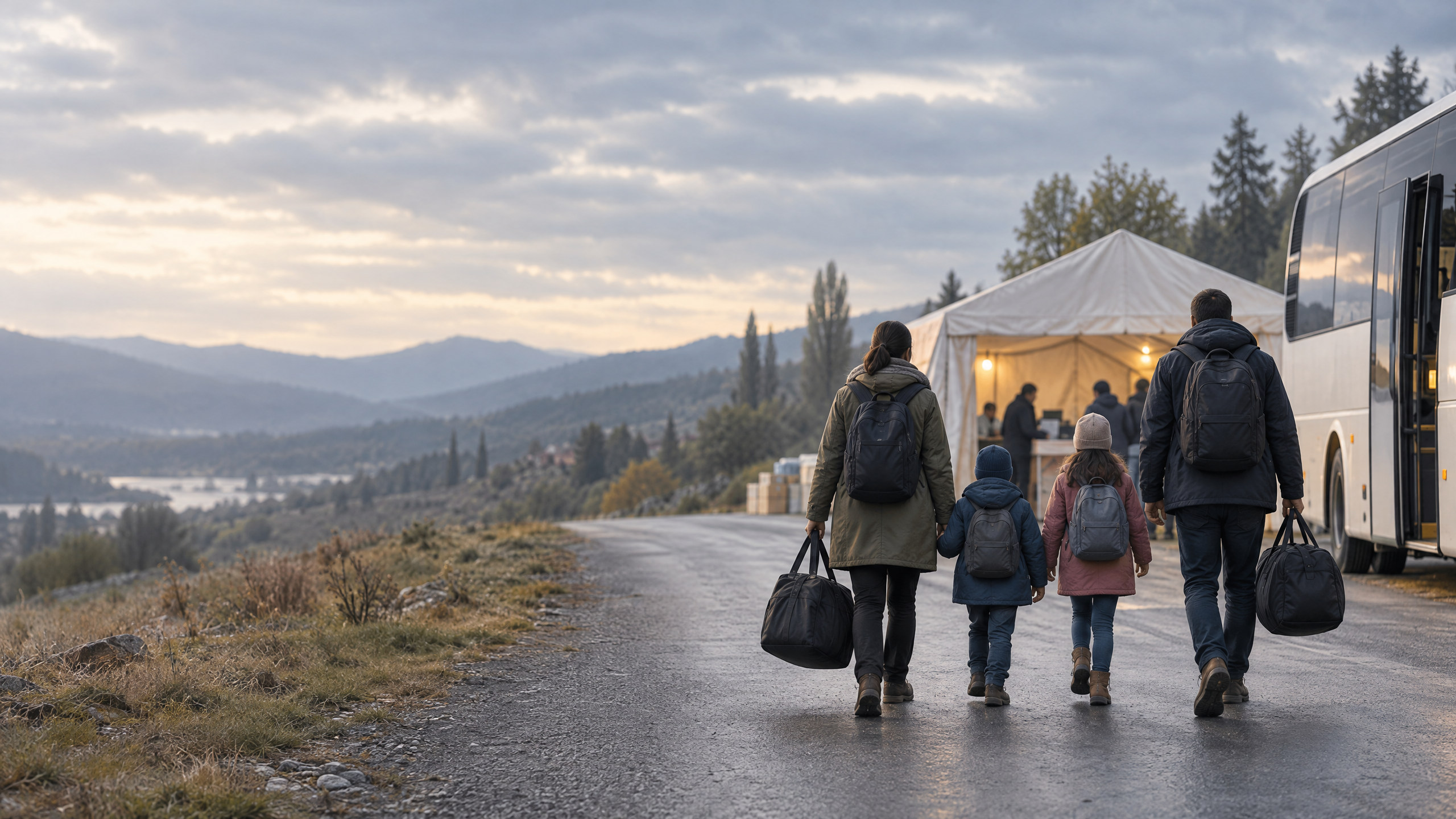
A temporary ceasefire around Oleshky in Ukraine’s Kherson region opened a narrow window for humanitarian aid and civilian evacuation. On October 31, residents who chose to leave reached Ukrainian government-controlled territory after a complicated journey through Crimea, Russia and Belarus, according to Reuters and the Associated Press.
The operation is significant for the people it helped. But it was local and time-limited. It is not evidence that the wider Russia–Ukraine war has stopped or that a national peace agreement has been reached.
What happened in Oleshky
Oleshky is a town on the Russian-controlled side of Ukraine’s southern Kherson region. Residents there faced severe shortages as fighting and damaged or mined routes restricted supplies. The UN reported that the temporary pause was intended to ease the emergency and allow people who wished to leave to do so safely and voluntarily.
The ceasefire began on Tuesday, October 27, and was expected to run through the evening of Sunday, November 1, according to the UN and the BBC. On Saturday, evacuees reached Ukraine after travelling from Oleshky through Crimea to Anapa in Russia, then by air to Gomel in Belarus and onward by bus. The precise number who left was not made public. Reuters reported that Ukraine’s human-rights ombudsperson gave no final count, while AP said officials withheld details to protect residents who stayed and any future humanitarian missions.

The route required coordination among Ukrainian and Russian humanitarian officials. AP reported that U.S. First Lady Melania Trump mediated the operation and that Pope Leo XIV also urged leaders to allow aid deliveries and civilian evacuations. Ukraine’s ombudsperson Dmytro Lubinets said the mission would be followed by medical and social support for evacuees, according to the Ukrainian National News Agency, Ukrinform.
The UN clarified that it did not organize the evacuation itself. It said it was providing humanitarian assistance to evacuees as they reached the Ukrainian side of the frontline. That distinction matters: diplomatic mediation, the officials who organized the movement, and humanitarian agencies’ support are related, but they are not the same role.
A humanitarian pause is not a peace deal
A localized ceasefire can create time to move supplies, clear a route and let civilians choose whether to leave. Reuters reported that Ukrainian and Russian officials said the pause had held without violations up to the time of its report, allowing demining and deliveries of food, medicine and other supplies. That statement is attributed to officials; it is not an independently verified account of every moment on the ground.
The limits are just as important. Reuters reported that fighting continued elsewhere along the front and that the Kremlin described the Oleshky arrangement as an isolated case that should not be projected onto the broader peace process. The Associated Press likewise reported that Russia and Ukraine remained engaged in the wider war. On November 1, President Volodymyr Zelenskyy described the operation as evidence that de-escalation steps are possible, according to The Guardian. That is a political assessment of one operation, not a guarantee of a wider truce.
The broader significance is therefore practical rather than predictive. A narrow local arrangement can reduce immediate danger and help people reach aid, even while the larger conflict and its political disagreements remain unresolved. Oleshky also shows how a civilian operation may depend on several layers of coordination across borders, while international organizations provide separate support once people reach safer areas.
How to read the next ceasefire headline
When a report says that a ceasefire has been agreed, check four details before assuming the fighting is over: where it applies, when it starts and ends, what the parties say it permits, and which outcomes have actually been confirmed. A pause around one town, a humanitarian corridor, a halt to attacks on one type of vessel and a countrywide ceasefire are different arrangements.
For Oleshky, the confirmed result reported by multiple outlets was that evacuees reached Ukrainian-held territory and humanitarian support was available there. The exact number evacuated was not publicly confirmed in the sources reviewed. The truce’s scheduled end on November 1 and the continuing fighting elsewhere make it especially important not to describe this local operation as the end of the war.
The careful conclusion is simple: the Oleshky pause created a short humanitarian opening for some civilians. Its value can be recognized without claiming that it settled the larger conflict.
Sources
- Reuters, October 31, 2026 — “Starved residents of Russian-occupied Oleshky return to Ukraine during a rare local ceasefire”
- United Nations News, October 30, 2026 — “Ukraine: Oleshky ceasefire offers ‘hope’ for civilians as attacks on aid vehicles continue”
- Associated Press, October 31, 2026 — “Residents evacuated from Russian-occupied Oleshky reach Ukraine after localized ceasefire”
- BBC, October 31, 2026 — “Hundreds evacuated from Russian-occupied Oleshky during rare Ukraine ceasefire”
- The Guardian, November 1, 2026 — “Ukraine war briefing: Oleshky truce shows de-escalation is possible, says Zelenskyy”
- Ukrinform, October 31, 2026 — “Lubinets announces briefing to detail humanitarian mission to Oleshky”
Leave a Reply